Argentine Tango
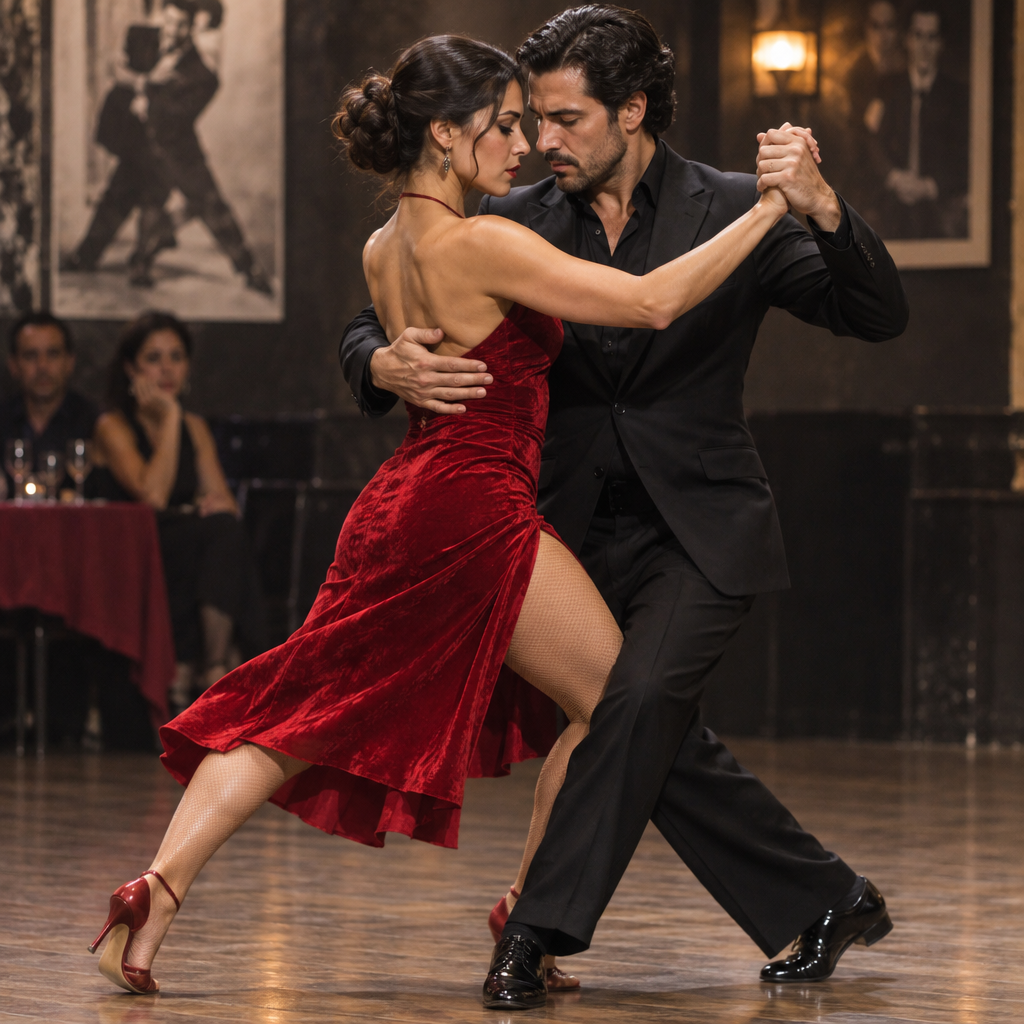
Overview
An improvisational dance emphasizing embrace, walking, subtle communication, and musical interpretation. Unlike ballroom Tango, Argentine Tango typically develops through spontaneous movement choices rather than prescribed sequences.
Musical characteristics
Often danced to Argentine tango music; the musical landscape also includes vals and milonga.
Movement characteristics
Walking, axis and balance, embrace, shared navigation, and responsive improvisation.
Difficulty and teaching progression
A beginner can start with timing, safe weight transfer, basic partner communication, and a limited number of figures. Progress to more demanding musical interpretation, technique, and combinations according to the student's goals and experience.
Partner interaction
Partner connection and clear communication support the dance; the precise use of frame, embrace, hand connection, and improvisation depends on the dance and its style.
Variations and terminology
Social Argentine Tango practices vary by community and embrace style.
Common misconception
Do not confuse Argentine Tango with ballroom Tango: similar names do not imply identical technique or floorcraft.
Wedding suitability
Phase 2 — pending instructor review. Judge suitability using the couple's actual music, available preparation time, comfort level, choreography goals, venue/floor, and clothing constraints. Do not infer that a dance is universally suitable for a wedding.
Instructor review checklist
- [ ] Confirm the core description and terminology
- [ ] Confirm meter, rhythm, and movement characteristics
- [ ] Confirm specific dance variants taught at Park Avenue Ballroom
- [ ] Approve teaching progression and examples
- [ ] Add or approve wedding suitability guidance
- [ ] Approve image usage, attribution, and alt text
Image brief
Argentine Tango couple in a close, elegant social-dance embrace.
